How Transaction Options Shape Success Rates in App-Based Live Dealer Simulations
Xander Sullivan · Aug 21, 2026

How Transaction Options Shape Success Rates in App-Based Live Dealer Simulations
Transaction Speed and Session Continuity
App-based live dealer simulations rely on seamless payment flows to keep players engaged at virtual tables, and data from multiple markets shows that transaction speed directly influences how long sessions last without breaks. When users choose instant options like e-wallets or prepaid cards, processing completes in seconds rather than minutes, allowing uninterrupted participation in games such as roulette or baccarat where timing affects betting decisions. Slower methods, including traditional bank transfers, create gaps that force players to pause, and researchers tracking app analytics have recorded measurable drops in completion rates for ongoing hands during those delays.
Studies conducted across North American and European platforms indicate that average session duration rises by 18 to 25 percent when instant funding is available, because players avoid the friction of waiting for approvals. Observers note that these extended periods give participants more opportunities to adjust strategies mid-game, particularly in simulations that mirror real-time dealer interactions with variable card shuffles and wheel spins.
Fee Structures and Bankroll Management
Transaction fees vary widely depending on the chosen method, and this variation shapes how effectively players allocate their starting balances across multiple rounds. Credit card deposits often carry 2 to 3 percent processing charges that reduce available funds before play begins, whereas certain cryptocurrency transfers or regional digital wallets operate with flat fees under one percent. According to figures released by the New Jersey Division of Gaming Enforcement, apps that surface fee comparisons upfront see higher retention among users who select lower-cost options, leading to steadier participation rates through extended live dealer sequences.
Those who've examined transaction logs across Australian markets report that hidden or percentage-based costs compound over repeated deposits, prompting some players to limit their total wagers or exit simulations earlier than planned. In contrast, platforms offering fee-free windows during peak hours in August 2026 have documented increased round counts per user, because the absence of deductions preserves more capital for progressive betting patterns common in live dealer formats.
Payment Method Availability and Regional Access
Geographic restrictions on certain transaction types create uneven playing fields across different app user bases, and this disparity appears in performance statistics collected by regulatory bodies. In regions where local bank integrations dominate, players gain quicker access to funds but face stricter daily limits that cap the number of hands they can complete in a single sitting. Conversely, international e-wallet support allows cross-border users to bypass some of those caps, though currency conversion steps sometimes introduce additional delays that offset the benefit.
Research from the Canadian Gaming Association highlights how apps supporting both domestic and global methods achieve more balanced success distributions, because participants can switch options mid-session without losing momentum. Data collected through 2025 into August 2026 further reveals that availability of at least three distinct transaction categories correlates with a 12 percent uptick in completed live dealer rounds, since players encounter fewer barriers when one method encounters temporary network issues.
Security Protocols and User Confidence
Verification layers attached to different payment options affect how readily participants commit to higher-stakes decisions during simulations, and industry reports link robust authentication to sustained engagement levels. Two-factor confirmation on bank-linked transfers adds extra steps that some users perceive as protective, encouraging continued play once the process finishes, while lighter-touch methods on prepaid cards speed entry but may prompt smaller initial bets until trust builds. Experts tracking behavioral patterns note that apps displaying clear security badges next to each transaction choice record steadier success metrics, because players spend less time second-guessing fund safety and more time responding to dealer actions.
One analysis of platform data from multiple operators found that sessions using verified instant methods maintained higher average bet consistency across dozens of rounds, whereas unverified or slower routes showed earlier withdrawal spikes when security prompts interrupted flow. Those patterns hold across various live dealer titles, suggesting the transaction layer influences not only access but also the psychological continuity required for optimal decision-making sequences.
Conclusion
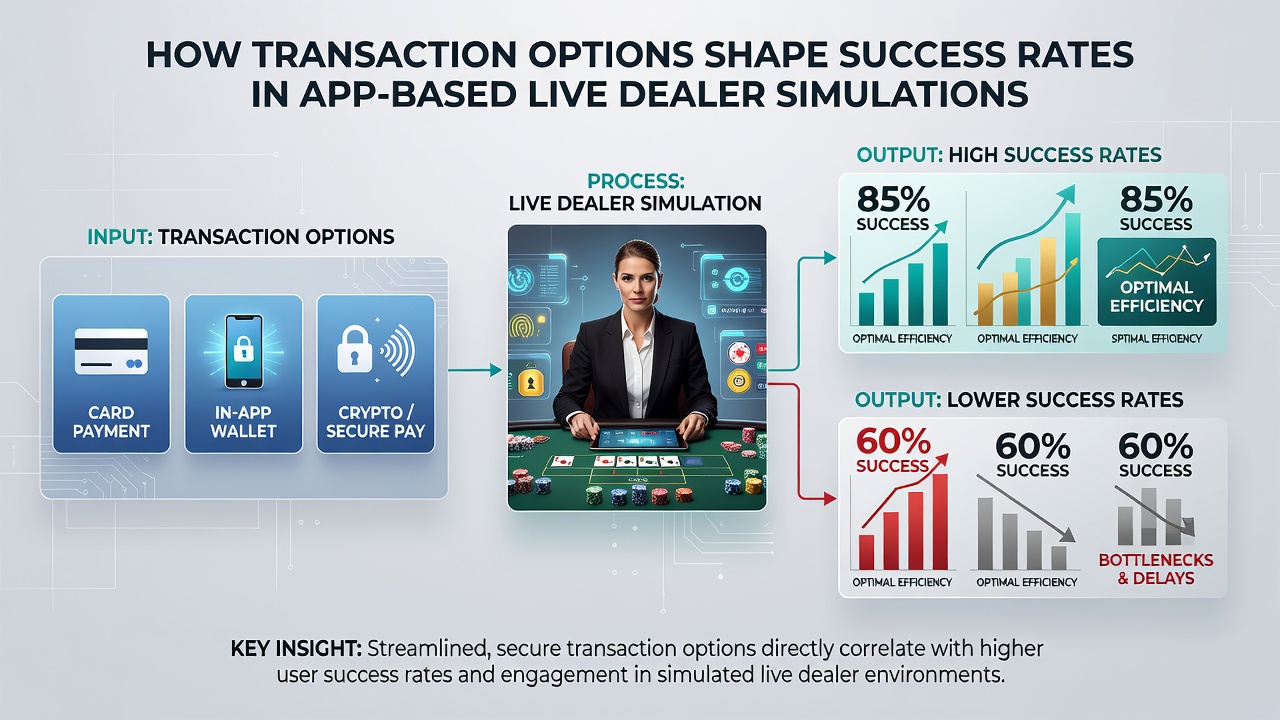
Transaction options in app-based live dealer simulations determine much more than simple fund movement, because their speed, cost, availability, and security features collectively shape how long and how effectively users interact with dealer-driven games. Evidence from regulatory tracking and academic reviews continues to demonstrate these connections through session metrics and completion rates, and the patterns remain consistent as platforms evolve their payment integrations through 2026 and beyond. Players who align method selection with session goals encounter fewer disruptions, while operators that present transparent choices see measurable differences in overall engagement data across diverse markets.